


It has not retreated on Hormuz, describes a return to pre-war conditions as no longer possible, and asserts absolute sovereignty and initiative in the strait.
Israel faces constraints as Iran remains resilient, the U.S. limits escalation and domestic politics drive risk with fewer options

Tehran can no longer rely exclusively on forward defense and must place greater emphasis on its own deterrence and self-defense capabilities.

Iran's ongoing strikes against armed Kurdish organizations are the field-level manifestation of a long-accumulating strategic transformation, rather than an immediate reaction.

YPG’s recent setbacks extend well beyond the Syrian theater. They may act as a catalyst for broader recalibration among Kurdish armed movements operating against the Islamic Republic –one that privileges political survivability over armed maximalism.

The Iraqi elections constitute a critical juncture that will directly influence Iran’s regional strategy.

Israeli Prime Minister Netanyahu's tactics are unlikely to produce a movement strong and organized enough to bring about regime change in Iran under the current circumstances.

Failure to conduct a realistic, measurable, and field-based threat assessment at the end of the 12-day conflict could lead Iran to greater vulnerabilities in the future with its current security architecture.
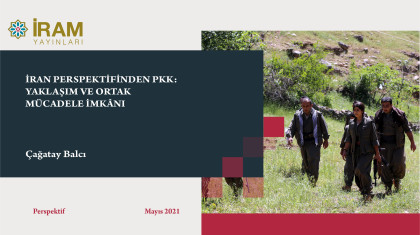
The regional equation, along with Iran’s and the PKK’s positioning in this equation, shapes the general characteristic of the Iran-PKK relationship.
