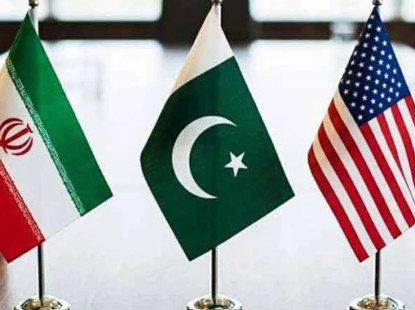


With the outbreak of the war on February 28, the nuclear issue has been absorbed into a far broader bargaining environment in which longstanding disputes over sanctions, ballistic missiles, regional influence, and entrenched mutual distrust now intersect with a new set of geopolitical frictions generated by the war itself.
The Nuclear Question in U.S.-Iran Talks

For decades, the nuclear file has constituted the central axis of U.S.-Iran tensions. The underlying logic of diplomacy remained relatively straightforward: Iran would limit its uranium enrichment activities, reduce its stockpiles, and accept more intrusive inspections by the International Atomic Energy Agency (IAEA), while Washington would provide sanctions relief in return. Even during periods of diplomatic breakdown, this basic framework continued to shape how both sides understood the contours of the crisis.
The war that erupted on February 28 has fundamentally altered that equation. The nuclear issue has not disappeared from the negotiating agenda, nor has it lost its strategic importance. Rather, it has been absorbed into a far broader bargaining environment in which longstanding disputes over sanctions, ballistic missiles, regional influence, and entrenched mutual distrust now intersect with a new set of geopolitical frictions generated by the war itself. Questions surrounding the future status of the Strait of Hormuz, maritime security in the Gulf, restrictions on Iranian shipping, and the durability of the April 8 ceasefire have all become intertwined with the nuclear file.
Beyond the Nuclear File
Today’s diplomatic process is considerably more complex than a narrow nuclear bargain. What is unfolding through direct and back-channel contacts is not merely a negotiation over centrifuges, uranium stockpiles, or inspection mechanisms. Rather, it is a broader strategic bargain shaped by disagreements not only over substance, but also over sequencing, reciprocity, and the linkages between different issue areas.
At least five major issues now dominate the negotiating agenda. The first concerns the formal termination of the war and the transformation of the April 8 ceasefire into a durable political framework capable of moving U.S.-Iran relations beyond a decades-long cycle of confrontation, coercion, and managed crisis. Tehran appears to be seeking reciprocal nonaggression guarantees and, ideally, a broader security arrangement anchored through the United Nations Security Council. Some reports further suggest that Iran favors the inclusion of Israel within such a framework, reflecting Tehran’s desire to institutionalize regional deterrence rather than merely suspend hostilities.
The second issue concerns the future status of the Strait of Hormuz: the restoration of commercial passage, the removal of Iranian transit restrictions, and the lifting of the de facto U.S. naval blockade on Iranian ports. Given Hormuz’s strategic importance to global energy flows, this issue has become inseparable from the broader diplomatic track.
The third concerns sanctions relief and the release of frozen Iranian assets — an issue Tehran continues to regard not merely as an economic demand, but as a test of American credibility and political intent.
The fourth remains the nuclear program itself, including the possibility of an enrichment moratorium, the future of highly enriched uranium stockpiles, the scope of International Atomic Energy Agency (IAEA) inspections, and restrictions on activities at underground nuclear facilities. Although no longer the sole focus of negotiations, the nuclear file remains the central threshold for any meaningful agreement.
The fifth issue concerns regional security. This includes the future of the Lebanese front, the role of Iran-aligned regional actors, and the longer-term question of the U.S. military footprint in the Gulf.
The Nuclear Divide
Across all issues currently under discussion, the nuclear file remains central. Yet the disagreement between Washington and Tehran extends beyond substance alone. It is equally a dispute over timing, sequencing, and political meaning. In this respect, the nuclear issue no longer occupies the same place in the strategic calculations of the two sides.
Washington seeks to make the formal end of the war and the lifting of maritime restrictions conditional upon concrete Iranian concessions in the nuclear domain. Tehran, by contrast, is attempting to reverse that sequence. Iran’s preference appears to be the formal and irreversible termination of hostilities, the redefinition of the status of the Strait of Hormuz, the lifting of U.S. maritime pressure, and the establishment of credible security guarantees before engaging in any substantive nuclear negotiation.
Iran’s most recent reported proposal to Washington offers perhaps the clearest expression of this sequencing strategy. According to accounts circulated across multiple outlets, Tehran has placed the formal end of the war across all fronts -including Lebanon- alongside nonaggression guarantees, a new security arrangement for the Strait of Hormuz, sanctions relief, and the release of frozen Iranian assets at the center of its proposal. The nuclear question, by contrast, would be deferred to a subsequent phase.
Part of this approach reflects domestic political considerations. Any major nuclear concession extracted under conditions of war, blockade, and military pressure would carry significant political costs inside Iran and risk being framed as capitulation. Yet Tehran’s strategy appears to be driven by more than domestic calculations. Increasingly, Iran seems intent on using what it perceives as an improved bargaining position to address not only the immediate crisis, but also the deeper structural asymmetries that have shaped U.S.-Iran relations for decades.
Indeed, Tehran appears to possess meaningful leverage in pursuing this strategy. By complicating passage through Hormuz, unsettling energy markets, exposing the dependence of the global economy -including the United States- on maritime stability in the Gulf, and drawing Washington into a prolonged maritime security crisis, Tehran has expanded the bargaining arena beyond the nuclear file. This broader strategic environment helps explain Tehran’s preference for postponing the nuclear issue to a later and potentially more advantageous stage. Even limited gains prior to substantive nuclear negotiations -whether through stabilizing the ceasefire, easing maritime pressure, securing guarantees against renewed attacks, or obtaining partial economic relief- would allow Tehran to enter future negotiations from a less vulnerable political and diplomatic position.
Washington, however, confronts a different strategic equation. The United States justified the war primarily through the language of the nuclear threat. Having framed Iran’s nuclear capabilities as an urgent and potentially existential security challenge, the Trump administration cannot easily disengage without securing visible and concrete nuclear concessions. In this sense, Washington’s own rhetoric has narrowed its diplomatic room for maneuver.
Yet the most immediate and costly postwar challenge confronting the United States may not, in practical terms, be the nuclear file itself, but the Strait of Hormuz. Iran’s pressure on maritime traffic carries immediate consequences for energy markets, Gulf security, and broader global economic stability. Although the U.S. naval blockade of Iranian ports is intended to offset Tehran’s leverage, it also risks entangling Washington in a prolonged confrontation whose political, military, and economic costs could escalate over time.
Time, moreover, may not necessarily favor Washington. According to reported CIA intelligence assessments, Iran may be capable of enduring the effects of the maritime blockade for at least several months before facing acute economic distress. If such estimates prove accurate, the blockade may fail to compel rapid Iranian concessions. Instead, it could gradually increase the diplomatic and economic burden on the United States while affording Tehran greater space for strategic patience.
This leaves Washington caught between competing imperatives. Ending the war without extracting meaningful nuclear concessions would carry significant political costs and risk appearing strategically inconclusive. Yet prolonging the Hormuz crisis could draw the United States into an increasingly expensive and difficult regional entanglement. The core American dilemma lies in the tension between the political necessity of demonstrating a visible success on the nuclear file and the practical need to restore stability in Hormuz as quickly as possible.
For this reason, Washington is unlikely to accept any war-termination framework entirely disconnected from Iranian nuclear commitments. From the U.S. perspective, the nuclear issue must remain the principal symbolic proof that the war produced a tangible strategic outcome.
This divergence helps explain the fragility of the current diplomatic process. For Tehran, the nuclear file has increasingly become one component of a broader postwar bargaining framework. For Washington, however, it remains the central issue through which the United States must demonstrate measurable gains before the war can formally end or a new diplomatic phase can begin. The future of the ceasefire, therefore, will depend not only on how much each side is willing to concede, but also on whether they can agree on the architecture of negotiation itself.