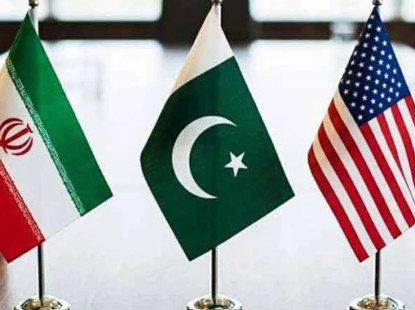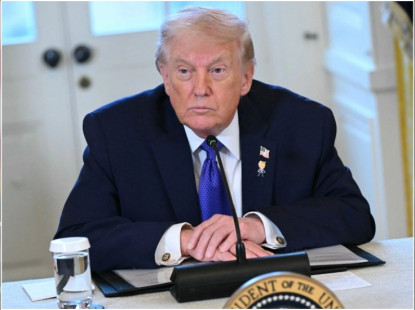


The memorandum of understanding signed by President Donald Trump and President Masoud Pezeshkian on June 17 broadly meets Ankara’s most immediate objective: preserving the ceasefire and preventing the U.S.–Israel–Iran conflict from escalating into a wider regional war.
Does the U.S.–Iran MoU Meet Ankara’s Expectations?

The memorandum of understanding signed by President Donald Trump and President Masoud Pezeshkian on June 17 broadly meets Ankara’s most immediate objective: preserving the ceasefire and preventing the U.S.–Israel–Iran conflict from escalating into a wider regional war. The understanding is particularly welcome as Türkiye prepares to host the 2026 NATO Summit on July 7–8, an event that would have unfolded under considerably more challenging circumstances had the region remained on the brink of a broader confrontation.
Throughout the crisis, Ankara’s overriding concern was not the precise contours of a future nuclear arrangement but the risk that continued hostilities could destabilize the wider Middle East, generating political, economic, and security consequences far beyond the immediate parties to the conflict. As President Recep Tayyip Erdoğan remarked in the early stages of the war, Türkiye’s priority was to secure “the termination of the war before it escalates and completely engulfs the region in flames.”
Turkish officials have welcomed the MoU as an important step toward regional stabilization. Following the cabinet meeting on June 15, President Erdoğan expressed satisfaction with the understanding, highlighted Türkiye’s contribution to the diplomatic process, and voiced hope that it would “fully pave the way for the establishment of lasting peace and stability in our region.” Similar themes were reflected in the statement issued by the National Security Council on June 18, which welcomed the understanding reached between Tehran and Washington, stressed the importance of sustaining the momentum of negotiations, and reaffirmed Türkiye’s readiness to support efforts aimed at achieving a durable regional settlement.
Yet Türkiye’s endorsement of the MoU has been accompanied by a notable degree of caution. Ankara appears acutely aware that the memorandum marks the beginning rather than the culmination of a diplomatic process. Speaking at a panel organized by the National Intelligence Academy (MİA) on June 15, İbrahim Kalın, Director of the National Intelligence Organization (MİT), welcomed the understanding while warning that the most difficult phase still lies ahead. As he noted, the coming weeks will be decisive, as the fundamental disputes between the parties are “addressed, discussed, and negotiated.”
This caution reflects a broader Turkish assessment that the durability of the process will depend less on the political symbolism of the signing ceremony than on the parties’ ability to translate broad commitments into workable arrangements. It is in this context that Turkish officials have repeatedly warned of potential spoilers. During a joint press conference with Russian Foreign Minister Sergey Lavrov in Moscow on June 16, Foreign Minister Hakan Fidan reiterated Türkiye’s support for the MoU while emphasizing the importance of its full implementation. Asked whether Israel could play a destabilizing role, Fidan replied that such a possibility could not be excluded. Echoing Ankara’s longstanding criticism of Israeli regional policies, he argued that Israel’s actions have become “not just a problem for a few countries, but for the whole world,” underscoring Turkish concerns that efforts to undermine the emerging diplomatic process remain a serious risk.
Why vagueness may be an asset
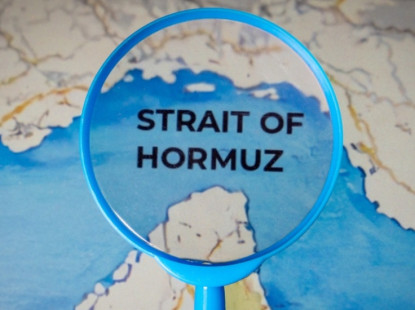
The MoU is particularly strong on two issues: ending the war and restoring navigation through the Strait of Hormuz – the two objectives Ankara has pursued since the outset of the conflict. Under the understanding, hostilities would cease on all fronts, including Lebanon, although the possibility of Israeli efforts to derail the process remains. At the same time, Iran would restore commercial navigation through the Strait of Hormuz, while the United States would lift its naval blockade of Iran.
Beyond these points, however, the memorandum becomes considerably less specific. Commitments relating to the creation of a reconstruction and economic development fund of at least $300 billion for Iran – an initiative that Washington would undertake together with “regional partners – as well as sanctions relief, the release of Iran’s frozen assets, and the future contours of a nuclear arrangement are articulated in broad terms rather than detailed provisions.
Yet this ambiguity may be less a weakness than a reflection of political reality. After almost five decades of mutual hostility, and following a direct military confrontation, it was always unlikely that Washington and Tehran would be able to resolve every contentious issue in a single document. The memorandum’s vagueness may therefore be what made it possible. By establishing a common political framework while deferring the most divisive questions, it creates space for negotiations to continue without requiring either side to abandon core positions at the outset.
From Ankara’s perspective, such flexibility offers an additional advantage. Türkiye has consistently argued that a viable diplomatic process must also reflect the interests and concerns of the wider region. This is particularly important given the balanced position Ankara sought to maintain throughout the conflict, condemning attacks against Iran while also criticizing Iranian strikes on regional countries. Preventing similar disruptions in the future will require the incorporation of a regional perspective into any final settlement. The ambiguity embedded in the MoU leaves room for greater regional involvement in the negotiations that follow, creating opportunities for regional actors to contribute to the search for a more durable settlement.
For Türkiye, therefore, the memorandum is best understood not as a final settlement but as an opportunity. It removes the immediate threat of regional escalation and creates space for diplomacy, both of which align closely with Türkiye’s strategic preferences. Whether that opportunity ultimately produces a lasting political settlement, however, will depend on the difficult negotiations that still lie ahead and on the ability of all parties to prevent regional tensions from once again overwhelming diplomacy.