As 2027 approaches, a central challenge for Tehran will be reconciling its interest in preserving the autonomy of these groups with Baghdad’s efforts to extend state authority.
What Is at Stake for Iran in Jurf al-Sakhar?

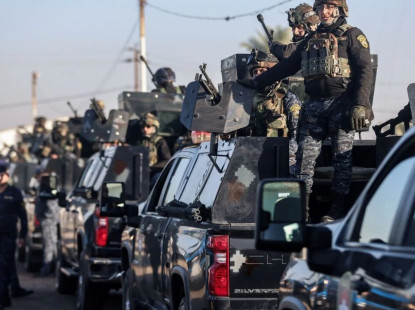
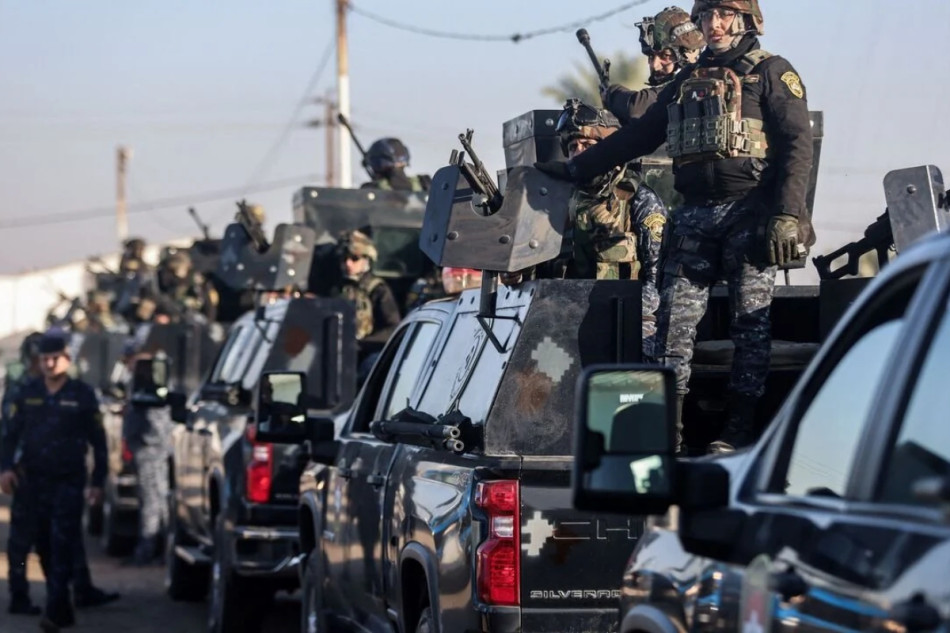
What began as an oil-smuggling investigation in Jurf al-Sakhar, in Iraq’s Babil Governorate, in the second half of November has escalated into a security crisis with potentially far-reaching implications. Although the immediate confrontation pits the Iraqi state against Kataib Hezbollah, which maintains a stronghold in the area, the stakes extend well beyond this dispute. At issue is the durability of the strategy through which Iran has sought to consolidate its influence in Iraq in recent years.
Strategically located on the banks of the Euphrates between Baghdad, Anbar and Karbala, Jurf al-Sakhar has, since 2014, evolved from a military stronghold into a territorial enclave largely beyond the reach of the Iraqi state. The area’s history as part of the so-called “Triangle of Death” south of Baghdad, where al-Qaeda and other Sunni armed groups operated after 2003, provided the security rationale for its subsequent isolation. By preventing tens of thousands of displaced Sunni residents belonging to the Janabi tribe from returning, renaming the area “Jurf al-Nasr” and effectively sidelining state institutions, Kataib Hezbollah was able to establish a zone of control largely insulated from Baghdad’s authority.
Jurf al-Sakhar’s strategic value to Iran stems precisely from the limited reach of both Baghdad and Washington in the area. Its importance has become particularly evident in the context of the two-pronged strategy Tehran has pursued in Iraq since 2025. On the one hand, Iran seeks to expand its political and institutional influence by integrating larger armed groups into the political system and state bureaucracy. On the other, it seeks to preserve areas beyond central government control through smaller armed formations, thereby retaining the option of using military force when necessary. By affording Kataib Hezbollah considerable operational freedom and an autonomous sphere of military activity, Jurf al-Sakhar has become an important component of this strategy. Tehran is therefore closely monitoring the crisis, which bears directly on the mechanisms through which Iran seeks to sustain its influence in Iraq.
The crisis began to take shape on 9 November with the leak of an intelligence report prepared by the Iraqi Ministry of Interior. The report alleged that oil pipelines had been illegally tapped and that the siphoned oil was being transported by tankers. On 15 November, the government spokesperson explicitly attributed responsibility to Kataib Hezbollah. Having backed down under pressure from pro-Iranian actors during a similar initiative in August 2026, the al-Zaidi government’s firmer stance in November may reflect lessons drawn from that earlier experience. Washington’s insistence that armed groups be held accountable, coupled with the 30 June 2027 deadline for bringing all weapons under exclusive state control, also forms part of the broader context shaping Baghdad’s actions.
An important distinction, however, must be drawn between the findings of the intelligence report and the government’s subsequent allegations. The leaked report did not directly implicate Kataib Hezbollah; the link between the group and the alleged smuggling operation was established publicly through the government spokesperson’s statement. Neither the alleged oil-smuggling activities nor Kataib Hezbollah’s responsibility for them has yet been established in court.
Iran’s Role in the Crisis
The controversy surrounding the investigation deepened with the emergence of security reports from August and September 2026 indicating that previous inspections had uncovered no evidence of oil smuggling at the sites in question. Babil Governor Ali Turki, who had publicly challenged the smuggling allegations, resigned on 12 November, reportedly under political pressure. Meanwhile, reports suggested that the investigative delegation could gain access to certain areas only in coordination with Kataib Hezbollah and along predetermined routes. If substantiated, these reports would indicate that the Iraqi government is obliged to negotiate with an armed group even to exercise its investigative powers within its own territory. Jurf al-Sakhar has thus become a critical test of Baghdad’s ability to reassert state authority.
Yet the stakes extend beyond the question of Iraqi sovereignty. The crisis also bears directly on Iran’s efforts to recalibrate its strategy of influence in Iraq. The clearest indication of Tehran’s involvement came on the evening of 16 November, when Quds Force Commander Esmail Qaani arrived in Baghdad for meetings with Abu Hussein al-Hamidawi, leader of Kataib Hezbollah; Hadi al-Amiri, head of the Badr Organisation; and Falih al-Fayyadh, chairman of Hashd al-Shaabi. Iraqi Shia political sources confirmed the visit, and al-Hamidawi himself publicly thanked Qaani in a statement issued on 19 November. Qaani’s intervention reportedly helped avert an armed confrontation between Iraqi security forces preparing to launch an operation in Jurf al-Sakhar and Kataib Hezbollah, paving the way for a negotiated resolution to the crisis.
Iranian media coverage of the crisis offers further insight into Tehran’s concerns. Outlets close to the Iranian establishment and the Revolutionary Guards, including Kayhan, Tasnim, Javan and Jam-e Jam, framed developments in Jurf al-Sakhar as part of a campaign orchestrated by the Gulf states, the United States and Israel to foment “sedition” and disarm Iraqi armed groups. This framing suggests that Tehran views the crisis not simply as a challenge to Kataib Hezbollah’s presence in Jurf al-Sakhar, but as a threat to its broader strategy of influence in Iraq, which depends in part on preserving armed groups capable of operating independently of central government control.
Rather than risk an open confrontation, Tehran appears to have sought a compromise through its military and security channels. Qaani’s intervention suggests that Iran is seeking to preserve the organisational integrity of its allied armed groups while preventing a direct confrontation with Baghdad. Reports that Kataib Hezbollah agreed to redeploy its members from Jurf al-Sakhar to other areas without relinquishing its weapons are consistent with this approach. Such an arrangement would allow Baghdad to restore a measure of state authority over the area without dismantling Kataib Hezbollah’s military structure. Tehran’s overriding concern, therefore, appears to be less the preservation of the group’s control over any particular territory than its continued existence as an armed organisation capable of mobilising when necessary.
Nevertheless, the Jurf al-Sakhar crisis represents a serious test of a central pillar of Iran’s evolving strategy in Iraq. Other Iranian-backed armed groups reportedly view the developments as a precedent for similar interventions in areas under their control. The expansion of oil-smuggling investigations into Basra, Kirkuk and Nineveh further suggests that the crisis may not remain confined to Jurf al-Sakhar. What is at stake, therefore, is not merely the geographical spread of the crisis, but the prospect of bringing the economic activities and autonomous operations of armed groups under state oversight.
These developments could force Tehran to reassess an approach that rests in part on preserving armed formations capable of operating independently of Baghdad. The al-Zaidi government’s efforts to consolidate central authority, reinforced by U.S. pressure to bring armed groups under state control, are making it increasingly difficult for Iran to preserve its existing instruments of influence. Rather than fundamentally reorienting its Iraq policy, however, Tehran may opt for tactical adjustments in response to changing conditions. Uncertainty over the political durability of the al-Zaidi government, its ability to assert state authority and the balance of power under a future administration may encourage Iran to prioritise preserving its allied armed groups and buying time over undertaking a broader strategic reassessment. As 2027 approaches, a central challenge for Tehran will be reconciling its interest in preserving the autonomy of these groups with Baghdad’s efforts to extend state authority.
Against this backdrop, reports that Abdolreza Mesgarian has been nominated to serve as Iran’s ambassador to Baghdad in 2027 take on particular significance. Mesgarian previously served as a commander at the Ramadan Headquarters, which was responsible for coordinating Iraqi Shia armed groups during the Iran–Iraq War. Tehran’s reliance on military and security figures such as Qaani to manage crises in Iraq, rather than on conventional diplomatic channels, and the prospective appointment of an ambassador with a military background and extensive experience in dealing with Iraqi armed groups point to the continued prominence of security considerations in Iran’s Iraq policy.
Taken together, these developments suggest that Tehran is more likely to adapt its existing instruments of influence than to abandon them. The Jurf al-Sakhar crisis may force Iran to reconsider how and where its allied armed groups operate, but not necessarily the strategic value it attaches to their continued existence. The challenge for Tehran will be to preserve these instruments of influence in an increasingly restrictive political and security environment.