

The geographic distance between Israel and Iran, the dispersed nature of Iranian nuclear sites, and the operational constraints of the Israeli Air Force significantly limit the feasibility and effectiveness of military action in achieving its ultimate objective.
Military Operation Is Not the Solution to Iran’s Nuclear Crisis

Israel has consistently framed Iran’s nuclear program as an existential threat, but since October 7, the evolving nature of the Iran-Israel confrontation and the widening fractures across the region have intensified this perception within Israeli security and policymaking circles.
Against this backdrop, advocacy for military action is gaining momentum, as an increasing number of analysts argue that diplomatic engagement, economic sanctions, targeted sabotage, and limited military strikes have failed to halt Iran’s nuclear progress. The growing consensus among Israeli defense elites suggests that a more decisive approach may be required to prevent Tehran from crossing the nuclear threshold.
Multiple media reports indicate that Israeli Prime Minister Benjamin Netanyahu is actively weighing the prospect of a military strike on Iran in the coming months. Speculation over this scenario has intensified amid high-level consultations between Netanyahu and the newly inaugurated U.S. administration, signaling that a military option is under serious strategic consideration.
In response, Iran has underscored its readiness by conducting defensive military drills simulating potential Israeli strikes on its Natanz, Fordow, and Arak nuclear facilities in early January, signaling its determination to deter or counter such an attack.
Support for military action has also come from former Prime Minister Naftali Bennett, who is positioned politically to Netanyahu’s right. In a strongly worded social media statement, Bennett declared: “Israel now has its greatest opportunity in 50 years to reshape the Middle East. We must act now to destroy Iran’s nuclear program, cripple its energy infrastructure, and deal a fatal blow to this terrorist regime. We have the justification. We have the tools. Now that Hezbollah and Hamas are paralyzed, Iran stands exposed.”
However, not all members of Israel’s ruling elite share the same confrontational stance. There is a growing recognition that military operations against Iran could face significant challenges and may lead to undesirable repercussions.
First, Iran’s nuclear capabilities have reached a level that is beyond the reach of conventional military strikes. This presents a dual challenge: Iran’s nuclear infrastructure and Israel’s military capabilities. The outcomes of Israel’s operations against Iraq's Osirak Nuclear Reactor in 1981 and Syria’s nuclear reactor in 2007 are unlikely to be replicated with Iran. Unlike these previous targets, Iran’s nuclear program is characterized by geographically dispersed and heavily fortified uranium enrichment sites, along with mines and research facilities. The complete destruction of such a vast, complex network is widely regarded as nearly impossible.
Beyond the physical infrastructure, Iran’s accumulated technical expertise in nuclear science presents an equally significant challenge. Over the years, Tehran has developed a deep reservoir of nuclear know-how, which cannot be eliminated through military strikes. This means that even if key facilities were damaged, Iran’s nuclear program would likely recover swiftly.
Historical assessments reinforce this point. A 2012 report estimated that a U.S.-led military strike, either alone or in coordination with Israel, could delay Iran’s nuclear program by up to four years, while a unilateral Israeli attack would set it back by only two years. However, since then, Iran has further hardened and diversified its nuclear infrastructure, making it likely that any new military operation would yield even more limited results. In the event of a strike today, Iran’s recovery time could be significantly shorter than previously estimated, allowing it to reconstitute its nuclear capabilities more efficiently than in 2012.
The other critical factor is Israel’s conventional military capabilities. Dismantling Iran’s nuclear program would require a highly complex, prolonged military campaign—one that many current and former senior officials acknowledge Israel is not fully equipped to execute alone.
Military analysts argue that Israel has the capacity to target specific sites, such as Natanz, which is partially buried underground and includes three underground (8 meters below the surface) and six above-ground facilities capable of housing 50,000 centrifuges. Similarly, Israel could strike above-ground nuclear infrastructure like Arak, but beyond these limited objectives, the feasibility of a large-scale comprehensive operation remains in question.
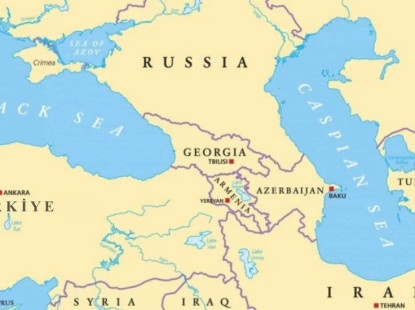
One of the primary challenges is geographic distance and the widespread dispersion of Iran’s key nuclear sites. Unlike previous Israeli airstrikes on nuclear facilities in Iraq (1981) and Syria (2007), a strike on Iran would require extensive air-to-air refueling due to the sheer distance between the two countries. This presents logistical hurdles, as Israel currently relies on an aging fleet of Boeing 707 aerial refueling tankers, which lack the range and efficiency needed for long-haul, multi-wave strike missions. While the United States has agreed to supply Israel with modern refueling aircraft, delivery is expected to take several years, making it unlikely that Israel could launch a sustained bombing campaign without significant U.S. support.
A major obstacle to the success of a military strike is Iran’s deeply fortified Fordow facility, which remains one of the most challenging targets within its nuclear infrastructure. Situated near the city of Qom, Fordow is buried deep within a mountain, with some areas reaching up to a thousand meters in elevation. Israel lacks the necessary capabilities to effectively neutralize such a hardened facility, particularly given its depth and protective geological barriers.
For over 15 years, the United States has favored diplomatic measures, sabotage operations, and economic sanctions over direct military intervention to curb Iran’s nuclear ambitions. Washington has also repeatedly denied Israeli requests for advanced hard-target munitions, including 30,000-pound bunker buster bombs, as well as long-range strategic bombers capable of carrying them. Unlike the U.S. Air Force, which operates B-1B Lancers, B-2 Spirits, and B-52 Stratofortresses, Israel’s airstrike capabilities rely on tactical fighter jets such as F-15s and F-16s, which are not designed for deep-penetration bombing missions.
Destroying Fordow and similar heavily fortified sites would require a specialized strategic air campaign, backed by advanced long-range bombers and precision-guided munitions –assets Israel does not currently possess. Without them, a failed or partially successful Israeli attack could backfire, allowing Iran to rapidly rebuild damaged infrastructure while also driving its nuclear program further underground, making future military action even more difficult.
Historical precedents suggest that limited military strikes on Iran’s nuclear infrastructure have, rather than deterring Tehran, reinforced its determination to advance its nuclear ambitions. If past experiences are any indication, a full-scale military operation by Israel may well prove counterproductive, accelerating rather than curbing nuclear proliferation.
Iran has consistently responded to acts of sabotage by constructing more fortified facilities, expanding its nuclear activities, and escalating uranium enrichment levels. A clear example of this came in 2021, when Israeli-led sabotage operations at the Natanz nuclear facility prompted Iran to begin enriching uranium to 60% purity for the first time –a critical step toward weapons-grade levels. Similarly, after the July 2020 attack on a centrifuge workshop at Natanz, Iran responded by constructing a more deeply buried facility, making it even harder to target in future operations.
It is evident that military intervention cannot eradicate nuclear proliferation risks unless the targeted program is still in its nascent stages. However, Iran’s nuclear program has long surpassed this point, with the country now widely regarded as a threshold nuclear state possessing the technical expertise and infrastructure necessary to develop a nuclear weapon in a very short time if it chooses to do so. Given these realities, the geographic distance between Israel and Iran, the dispersed nature of Iranian nuclear sites, and the operational constraints of the Israeli Air Force significantly limit the feasibility and effectiveness of military action in achieving its ultimate objective.
Moreover, any direct military strike could fundamentally alter Iran’s strategic calculus, pushing Tehran to conclude that possessing nuclear weapons is the only way to safeguard its sovereignty. This would transform what Israel perceives as an “existential threat” from a potential scenario into a self-fulfilling prophecy.