

Ultimately, the success of Trump's new pressure strategy on Iran will rest on Washington’s ability to calibrate pressure with diplomatic flexibility and Tehran’s willingness to engage on Washington’s terms.
Trump’s Renewed Maximum Pressure Policy on Iran: What’s the Endgame?

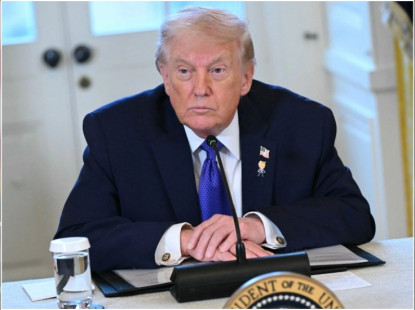
On February 4, President Donald Trump signed a National Security Presidential Memorandum, reinstating the maximum pressure policy against Iran. While signing the memorandum, Trump remarked, “Hopefully, we are not going to have to use it very much.” Shortly thereafter, the White House released a detailed fact sheet outlining the document’s scope and objectives.
Unlike the Executive Order that launched Trump’s original maximum pressure campaign on August 6, 2018, a Presidential Memorandum carries a different –though not entirely distinct– legal weight. Whereas an Executive Order is a legally binding directive that must be publicly issued, a Presidential Memorandum serves as an internal policy directive and does not necessarily require official publication. The former is more frequently used in foreign policy and has greater enforceability, making Trump’s latest memorandum a comparatively softer instrument.
This distinction suggests that while Trump is reinstating his pressure policy, he may be leaving room for diplomatic engagement. His expressed willingness to meet Iranian President Masoud Pezeshkian further supports this interpretation. However, while the memorandum’s form leaves open a door for negotiations, its content signals an unequivocal tightening of pressure on Tehran, encompassing a broad array of sanctions and strategic constraints. The measures range from Iran’s nuclear program and missile development to its regional influence operations and economic relations.
The fact sheet describes Iran’s uranium enrichment activities and its ballistic missiles –allegedly capable of carrying nuclear warheads– as an existential threat to U.S. and global security. It accuses Tehran of violating the Nuclear Non-Proliferation Treaty (NPT) by failing to transparently declare nuclear materials and facilities; obstructing International Atomic Energy Agency (IAEA) inspections, raising concerns about undisclosed nuclear sites; and providing material support to terrorist organizations, further justifying the pressure policy.
The administration contends that maximum pressure can effectively curtail Iran’s nuclear program, limit its ballistic missile development, and restrict its regional activities. To this end, the strategy seeks to halt uranium enrichment, expand IAEA inspections, and degrade Iran’s missile capabilities.
Beyond the nuclear dossier, Trump’s policy also focuses on neutralizing Iran’s regional power projection, particularly through ‘proxy groups’ aligned with the Islamic Revolutionary Guard Corps (IRGC). The strategy aims to disrupt financial networks that sustain the IRGC and its allied militias; dismantle Tehran’s regional influence apparatus, particularly in Lebanon, Yemen, Iraq, and Syria; and prevent Iran-backed groups from establishing safe zones by launching international diplomatic campaigns against them.
Technological sanctions and export restrictions also play a key role in eroding Iran’s military capacity. The administration is seeking to block Iran’s access to military technology, limit its asymmetric warfare capabilities, and impose stricter controls on its conventional weapons. This comprehensive framework extends beyond defense industries, targeting civilian technological sectors that could indirectly support Iran’s military ambitions.
At the heart of this maximum pressure reboot is a three-pronged economic strategy aimed at completely halting Iran’s oil exports, its primary revenue source; blocking its access to the international financial system and preventing Iran from circumventing sanctions, particularly through regional intermediaries.
The linchpin of this strategy is disrupting Iran’s oil trade with China, Tehran’s largest crude buyer. To reinforce this, Washington is intensifying regional cooperation to prevent Gulf states from serving as sanction-evading transit hubs. Additionally, the U.S. is developing mechanisms to block Iran’s use of Iraq’s financial system to bypass restrictions.
A key element of the policy is Washington’s renewed push for multilateral enforcement, leveraging UN mechanisms to reactivate sanctions lifted under the 2015 nuclear deal (Joint Comprehensive Plan of Action, or JCPOA). However, since the U.S. withdrew from the agreement in May 2018, it currently lacks the authority to unilaterally trigger the UN’s ‘snapback’ mechanism, which would automatically reinstate international sanctions. To navigate this, Washington is rallying allies to exert diplomatic pressure on Iran while reinforcing unilateral measures.
Trump’s new maximum pressure strategy is notably more structured and multifaceted than its predecessor. While the original 2018 campaign primarily focused on economic strangulation, the revamped approach targets Iran’s nuclear program, regional entrenchment, military-industrial capabilities, and economic survival.
By significantly reducing Tehran’s strategic maneuverability, the administration hopes to compel Iran back to the negotiating table. Iran’s longstanding expertise in circumventing sanctions could blunt the full impact of U.S. economic restrictions. Furthermore, China and Russia’s response will be crucial in determining the effectiveness of the pressure campaign. Should China and Russia choose to economically embrace Iran, this would create a formidable obstacle to Washington's pressure campaign and could render American sanctions increasingly ineffective.
If Washington and Tehran fail to reach an understanding, intensified sanctions will exacerbate pressure on Iran’s economy and political system. However, the success of this strategy will be determined by how effectively Washington can isolate Iran –and whether Tehran can withstand the pressure or use geopolitical shifts to its advantage. Ultimately, the success of this strategy will rest on Washington’s ability to calibrate pressure with diplomatic flexibility and Tehran’s willingness to engage on Washington’s terms.