

Hardline factions such as the Paydari Front, whose ideological rigidity and institutional foothold in parliament and the media give them considerable discursive weight, remain a domestic pressure point that Iranian decision-makers must carefully navigate.
Misreading Tehran: The Myth of Iran’s Divided Elite

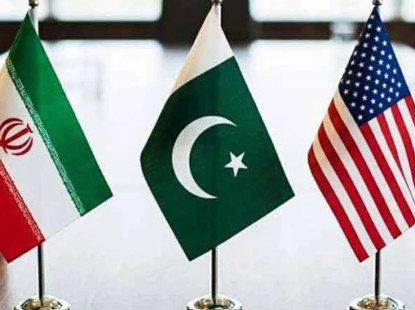
As diplomatic contacts between Washington and Tehran resume in the aftermath of the ceasefire, a familiar argument has once again returned to the center of policy debate: the claim that Iran’s ruling elite is fundamentally divided over the future of negotiations with the United States. Much of the commentary presents this supposed divide as a struggle between “pro-engagement” pragmatists and “anti-negotiation” hardliners competing over the Islamic Republic’s strategic direction. Increasingly, this interpretation has moved beyond media commentary and into policymaking circles in Washington, where officials and political actors suggest that the continuing diplomatic deadlock stems less from the substance of American demands than from factional paralysis inside Tehran.
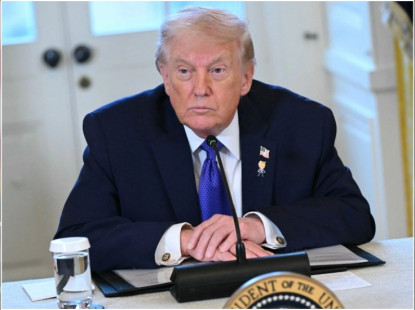
The argument is politically convenient. Blaming diplomatic failure on the internal dysfunction of the opposing side lowers the political costs of stalemate, both domestically and internationally. For the Trump administration, the image of a fractured Iranian elite offers a useful explanation for the absence of diplomatic progress. It allows Washington to present itself as open to engagement while shifting responsibility for the impasse onto what is portrayed as Tehran’s incoherent and divided decision-making system.
From Tehran’s perspective, however, this narrative is not viewed as a neutral interpretation of Iranian politics. Rather, it is increasingly seen as part of a broader struggle over perception and political psychology. Iranian officials appear to regard repeated claims of elite fragmentation as a form of strategic signaling intended to deepen mistrust within the system, complicate coordination among state institutions, and raise the political costs of high-stakes decision-making. At a moment when Iran’s political and security apparatus is operating under extraordinary external pressure, such claims are perceived not simply as rhetorical attacks, but as tools aimed at shaping the internal psychology of the state itself.
It is precisely for this reason that senior Iranian officials have recently placed unusual emphasis on themes of unity, institutional cohesion, and national resolve. The executive, legislative, and judicial branches have each sought to project an image of coordination and continuity. Military and security figures have echoed the same message. Taken together, these statements point to a deliberate effort to counter external narratives of fragmentation and demonstrate that the Islamic Republic’s strategic calculations are not being dictated by uncontrollable factional conflict.
None of this means that the Iranian political system is free of internal disagreement. It is not. The Islamic Republic has always contained competing ideological tendencies, bureaucratic rivalries, institutional interests, and differing tactical preferences. The real question, therefore, is not whether disagreements exist –they clearly do– but whether they amount to a structural rupture capable of fundamentally shaping Iran’s negotiating posture toward the United States. On this point, the evidence is far less convincing than many outside observers assume.
The debate is therefore better understood not as a binary struggle between supporters and opponents of negotiation, but as an ongoing process through which competing ideological and institutional tendencies are managed within a single political order. Iran’s leadership must navigate multiple and often contradictory pressures at once: preserving strategic flexibility while avoiding any perception of capitulation, sustaining deterrence while preventing uncontrolled escalation, and maintaining the loyalty of its ideological base while adapting to shifting geopolitical realities. This balancing act is often contentious and at times visibly messy. But internal contestation should not be confused with systemic fracture. Messiness, in other words, is not the same as disintegration.
How Powerful Is the Paydari Front?
The most prominent version of the “elite-split” thesis places particular emphasis on the Paydari (Stability) Front, the radical conservative faction frequently portrayed as the main obstacle to renewed negotiations between Tehran and Washington. Within this framework, Paydari’s ideological hostility toward the West, uncompromising opposition to engagement with the United States, and influence over segments of Iran’s conservative constituency are presented as decisive factors blocking diplomatic progress.
This interpretation is often paired with a second claim: that Paydari maintains close organic ties with Mojtaba Khamenei and influential elements within Iran’s security establishment. Some analyses go even further, arguing that networks associated with the Islamic Revolutionary Guard Corps and Paydari-aligned actors have increasingly converged in shaping the country’s strategic direction. The implication is clear: negotiations remain stalled because a hardline bloc has consolidated control over the strategic core of the Iranian state.
Such claims, however, significantly overstate Paydari’s actual position within the system. The movement is undeniably visible, ideologically assertive, and politically consequential. But visibility should not be mistaken for command. Paydari’s influence is concentrated mainly in parliament, ideological media networks, and segments of the conservative social base. It is not institutionally embedded within the executive apparatus or the central security bureaucracy in a way that would allow it to dictate state-level strategic decisions.
In practice, Paydari functions less as a force directing policy from the commanding heights of the system and more as a pressure current operating from the ideological flank. It criticizes negotiation efforts, accuses officials of excessive flexibility, and frames compromise with Washington as capitulation. Its real strength lies in its ability to raise the domestic political costs of diplomacy rather than determine final strategic outcomes.
This distinction matters. Paydari can mobilize conservative opinion, influence ideological discourse, and portray engagement with the United States as a betrayal of revolutionary principles. Through aligned media platforms and political networks, it can intensify scrutiny of government diplomacy and pressure officials to justify every gesture of accommodation. But this influence remains indirect. It is exercised through ideological pressure, narrative construction, and factional mobilization rather than institutional command authority.
The frequently asserted alignment between Paydari and Mojtaba Khamenei also requires a more nuanced reading. Iranian conservative politics has never functioned as a monolithic bloc. Rivalries among conservative factions remain significant, and competing networks continue to hold different views regarding succession, authority, and the future ideological direction of the Islamic Republic. It is therefore misleading to assume that Paydari’s hardline stance automatically translates into unconditional support for Mojtaba Khamenei’s leadership role. Until relatively recently, parts of this milieu were far from uniformly supportive of his emergence and held alternative preferences regarding the future configuration of authority within the system.
None of this means that Paydari and similar hardline currents are politically irrelevant. On the contrary, their importance stems precisely from their embeddedness within the regime’s broader ideological ecosystem. They help mobilize the conservative base, reinforce revolutionary narratives, and police the boundaries of acceptable political discourse. During periods of heightened regional confrontation and the possibility of renewed conflict, the leadership cannot easily afford to alienate these constituencies altogether. The state relies on their ideological energy even as it seeks to prevent them from becoming dominant.
For this reason, Tehran’s approach has historically focused less on allowing ideological factions to rule outright and more on managing and containing them. The leadership seeks to limit Paydari’s ability to derail policy while ensuring that it remains integrated within the broader political order. This reflects a long-standing pattern within the Islamic Republic: ideological currents are rarely allowed to monopolize the state, but neither are they completely excluded from it. Instead, they are balanced against one another, selectively absorbed, periodically disciplined, and at times strategically instrumentalized.
More broadly, reducing the current diplomatic impasse to Paydari’s influence obscures more than it explains. The obstacles to a meaningful American-Iranian breakthrough do not arise simply from radical conservatives obstructing diplomacy from the sidelines. They are rooted in deeper structural realities: Iran’s postwar threat perceptions, Washington’s continued reliance on coercive pressure, entrenched mutual distrust, unresolved sanctions disputes, and the considerable political costs both sides continue to attach to compromise.
The narrative of a deeply fractured Iranian elite may serve a useful political function in Washington, but analytically it remains remarkably thin. It exaggerates the role of a single faction, oversimplifies the mechanics of Iranian governance, and underestimates the extent to which Tehran’s foreign-policy decisions emerge from a broader calculus centered on regime security, deterrence, and political survival. Iran’s internal politics undoubtedly matter, but they do not operate in the reductive and highly personalized way they are often imagined from abroad.
The more important reality is not that Iran is neatly divided between those who seek an agreement and those who categorically reject one. Rather, the system is trying to preserve strategic coherence while simultaneously managing ideological dissent, factional rivalry, and mounting external pressure. Paydari is part of that equation, but it is not the equation itself. Treating it as the master key to understanding Tehran’s behavior risks mistaking political noise for actual power and factional theater for strategic command.